Archaeology

Introduction

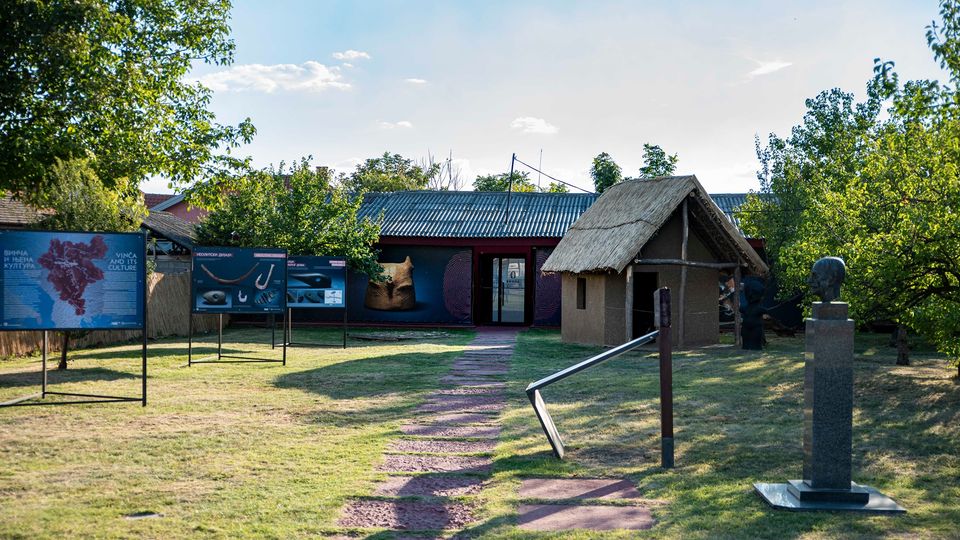
Vinča archaeological site
Prehistoric site of Vinča, near Belgrade

Archaeology studies the past through material remains and artefacts, helping us understand how ancient societies lived, worked, and interacted with their environment. Without systematic research, much of human history would remain unknown.

The science of archaeology is vital for understanding the deep past of human civilization. Serbia, positioned at the crossroads of Central Europe and the Balkans, has a long and complex history shaped by diverse cultures, landscapes, and historical processes. This rich past has produced thousands of archaeological sites, many officially protected as cultural heritage.

On this site, we will learn more about archaeology and history by exploring selected examples of archaeological sites from Serbia and understanding what they reveal about past human life.

What does archaeology study:

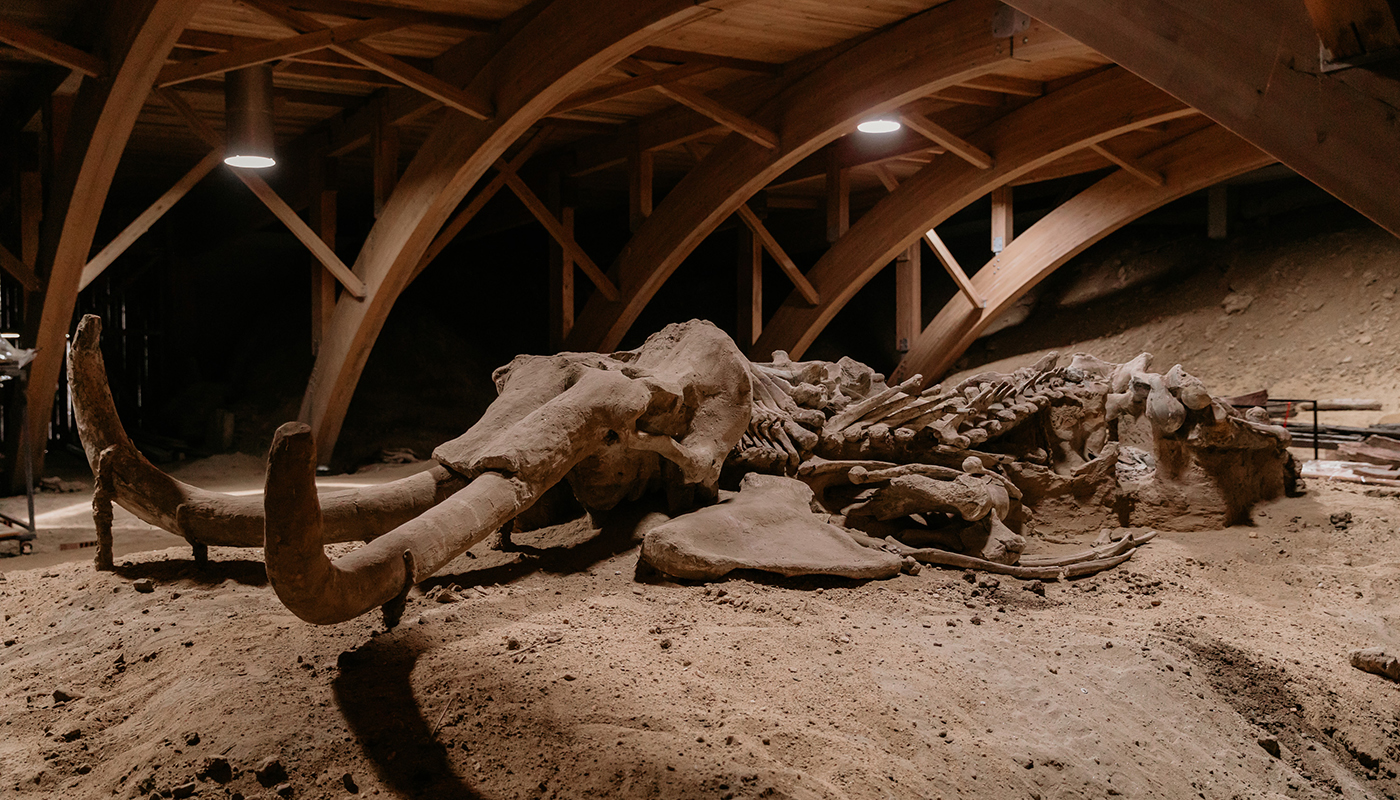
Mammoth remains in Viminacium

Archaeology studies material traces left by past communities to understand their social life, technology, economy, and beliefs. Key areas include:

  • Settlement remains: houses, villages, and other sites showing how communities lived and organized space.
  • Tombs, human and animal remains: burial sites revealing social hierarchy, rituals, and beliefs about death, and skeletal material providing insights into health, diet, demographics, domestication.
  • Everyday objects and artefacts: tools, pottery, clothing, jewelry, and symbolic items reflecting daily life and craft.
  • Infrastructure and trade: roads, bridges, aqueducts, urban planning, illustrating communication, trade, technology or cultural exchange.
  • Forts and defensive structures: fortifications, walls, watchtowers, and other military installations indicating strategies for protection of territory, and settlement planning.
  • Religious architecture and objects, art and symbolic expression: temples, shrines, ritual tools, and religious constructions reflecting spiritual and ceremonial practices.

By combining these findings, archaeologists gain insight into how communities adapted to their surroundings, developed technologies, organized socially, and interacted with neighboring cultures over time.

Archaeological activities:

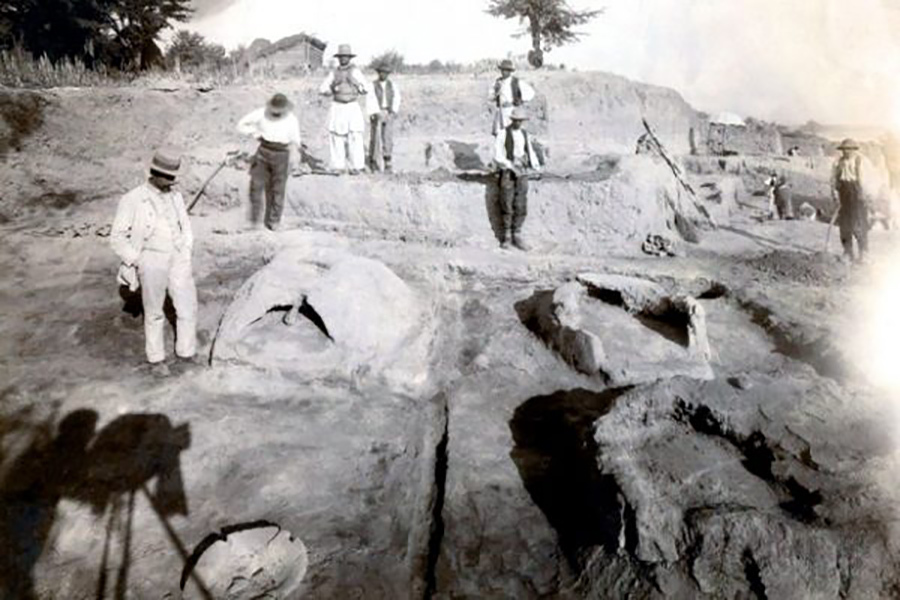
Earlier excavations in Vinča
Excavations on the prehistoric site of Vinča at the beginning of the 20th century

Archaeological research combines practical fieldwork with analytical methods. These activities help uncover, document, and interpret material traces, allowing archaeologists to reconstruct past environments, cultural practices, and historical developments.

  • Survey methods: before excavation, archaeologists use techniques like magnetometry, ground-penetrating radar, electrical resistivity, soil analyses, pedestrian surveys, aerial photography, satellite imagery, and LiDAR to detect buried structures and map promising areas.
  • Field excavations: excavations follow rigorous methods. Each trench or test pit is numbered and recorded in a diary, noting soil layers, features, artefacts, and conditions. Measurements are taken with surveying instruments,and structures and artefacts are photographed, drawn, and labeled for laboratory analysis.
  • Artefact analysis: every object tells a tale. From pottery shards to metal tools, archaeologists examine artefacts to determine their function, origin, and cultural significance. Techniques such as microscopic analysis, residue testing, and 3D scanning help reconstruct ancient diets, technologies, and artistic expression.
  • Dating and contextualization: archaeologists use stratigraphy, dendrochronology, radiocarbon analysis, and other methods to date finds and place them in historical and cultural contexts. This builds timelines showing settlement, migration, and interaction patterns.
  • Publishing results: research only becomes meaningful when shared through reports, articles, conferences, museum exhibits, and digital reconstructions, connecting the past with modern society and advancing knowledge.

Overview

Timeline
Timeline

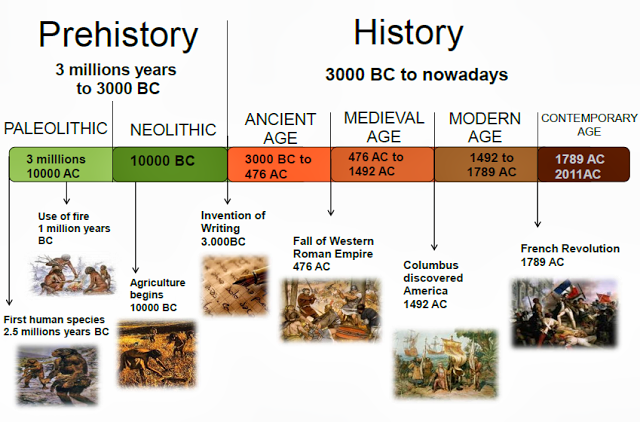
The history of human existence is traditionally divided into distinct periods. For the largest part of this history, our knowledge is limited, and it belongs to what is called Prehistory. Prehistory itself is divided into the Stone Age - Paleolithic, Mesolithic, and Neolithic, and the Metal Age - Copper, Bronze, and Iron. Recorded history begins with the emergence of writing.
Antiquity is a diverse period, marked by achievements in science, architecture, and social organization.
It is followed by the Middle Ages, which also witnessed major civilizational developments, culminating with the Renaissance, the invention of the printing press, and the Age of Discovery, heralding a new era.

Lepenski Vir
(Mesolithic settlement - 9500-6000. BCE)

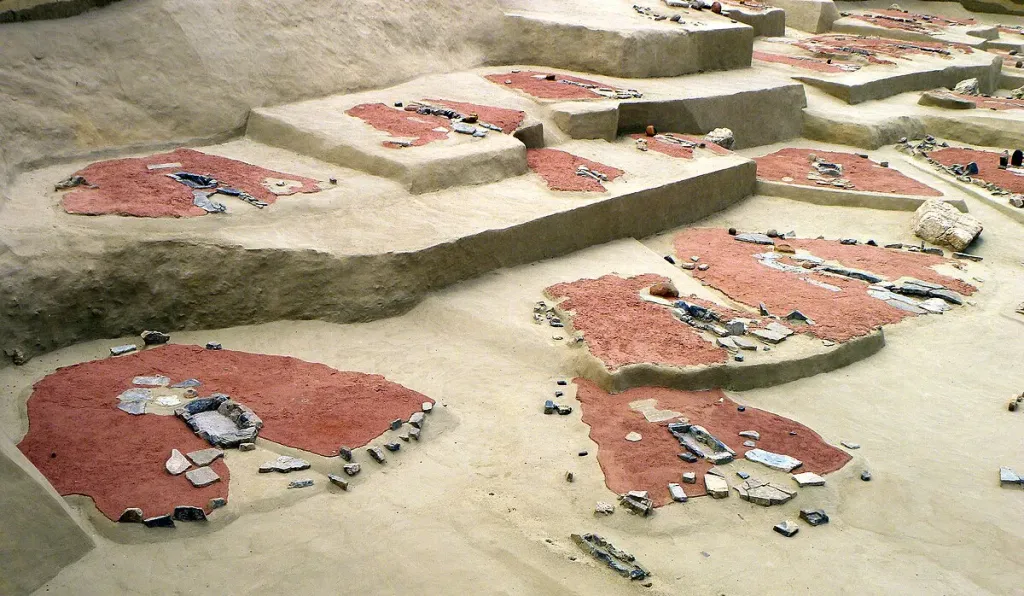
Red Red-plastered house foundations at Lepenski Vir
Red-plastered trapezoidal house foundations
3D model
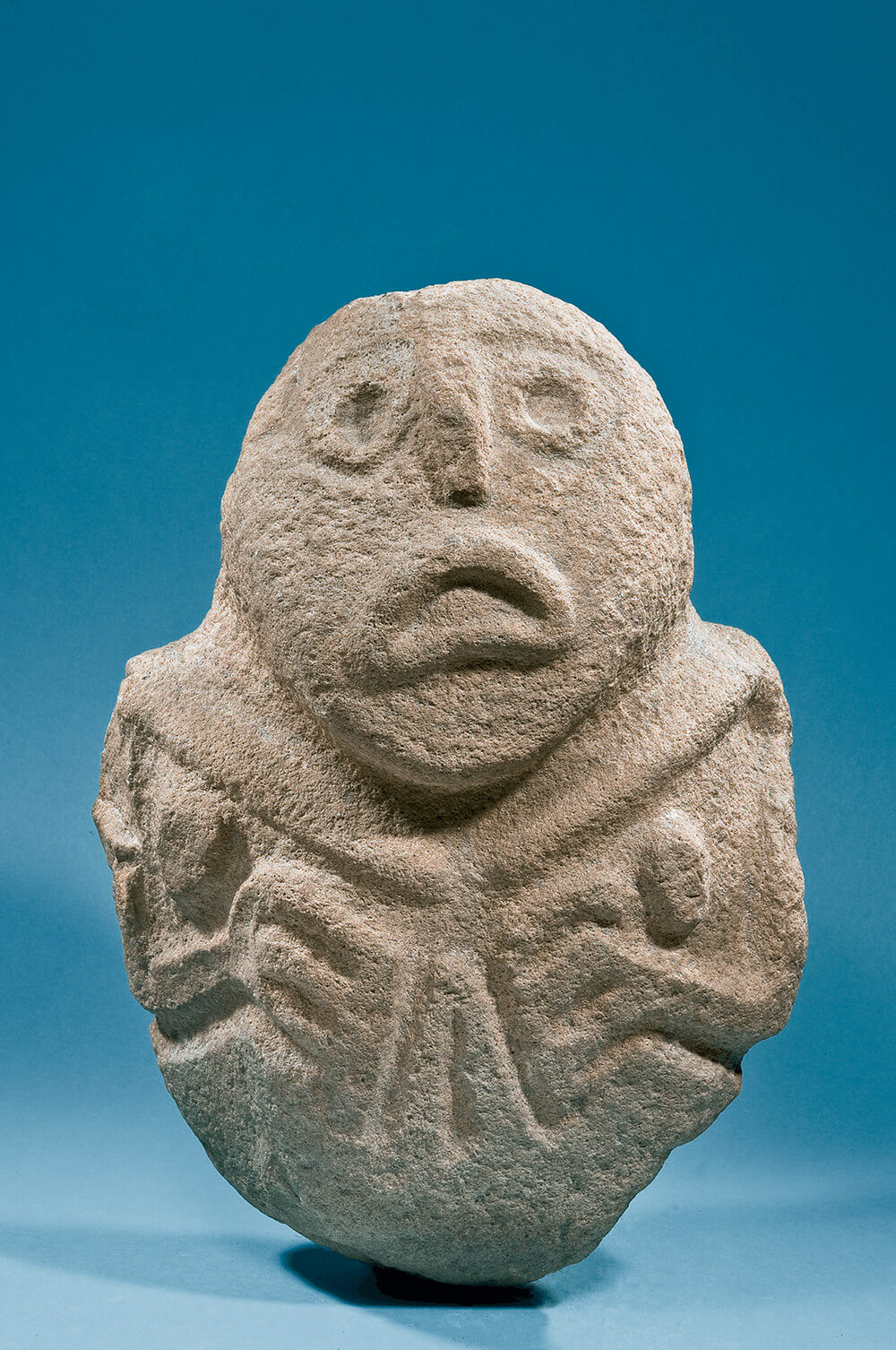
Fish-like sculpture from Lepenski Vir
Ichtyomorphic sculptures (fish-like sculptures) are considered the oldest monumental stone sculptures in Europe

map-icon Lepenski Vir is a uniquely organized Mesolithic settlement located in the Đerdap (Iron Gates) Gorge, occupied roughly between 9500 and 6000 BCE, and known for its trapezoidal houses with red limestone floors and carefully planned layout. It is also famous for its monumental fish-human stone sculptures, while the site as a whole reflects a broader transition from hunter-gatherer life toward early Neolithic practices.

In its later phase, Lepenski Vir III (Starčevo phase) demonstrates a clear transition to the Neolithic period, through the interaction of local hunter-gatherers and incoming farmers from the Aegean/Anatolia. This change is evident in the introduction of Starčevo pottery and new tools, as well as changes in diet to include domesticated animals and plants. Ritual practices also evolved, combining the local tradition of trapezoidal houses with Neolithic customs such as building clay ovens and burials within the settlement, pointing to a hybrid culture. About chronology and stratigraphy you can read more here.

Lepenski Vir, a short guide

Vinča
(Neolithic culture - 5400-4500. BCE)

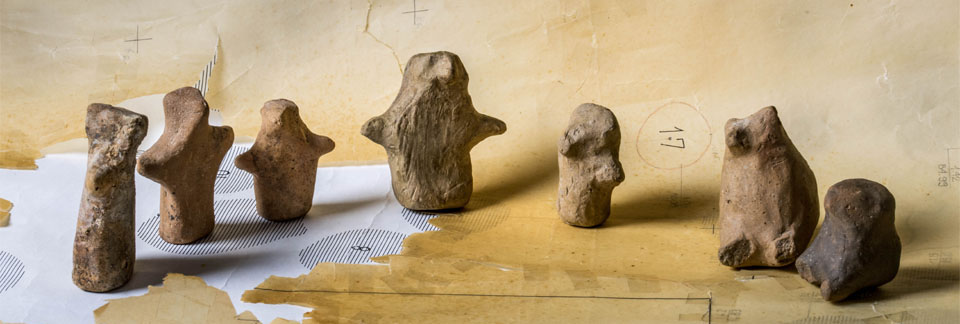
Archaeological exhibition showing figurines from the Vinča culture
Vinča culture, around 5400-4500 BC. Figurines
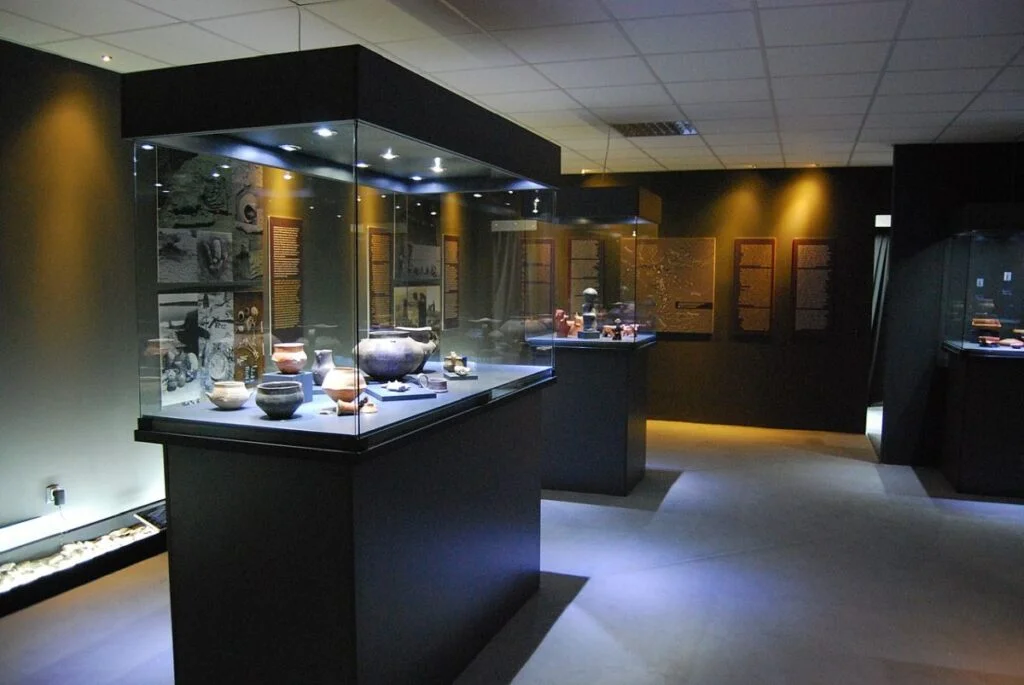
Vinča ceramics in National Museum in Belgrade
Vinča culture - ceramics

map-icon The Vinča culture represents one of the most significant and earliest large-scale prehistoric settlements in Europe. The type site, Vinča-Belo Brdo, was discovered in 1908 by the prominent Serbian archaeologist Miloje Vasić. This crucial archaeological site is located approximately 14 kilometers southeast of Belgrade, Serbia, positioned on the right bank of the Danube river.
The broader Vinča culture itself was the dominant Neolithic culture in Southeastern Europe, centered in modern-day Serbia, with influence and settlements extending across the territories of several contemporary nations, including Romania (Transylvania and Oltenia), Bulgaria, Bosnia and Herzegovina, North Macedonia, Croatia, and Hungary.

The culture thrived from approximately 5400 to 4500 BCE and is known for its well-planned settlements, substantial multi-room houses, and complex social organization, forming Europe's first proto-urban communities. The rich material culture is highlighted by thousands of intricate clay figurines, which suggest elaborate ritual practices and a complex symbolic system.
While graves within the settlements are rare, separate, organized necropolises indicate structured funerary rites. Settlements sometimes featured defensive structures like palisades and ditches, and the deliberate burning of old houses created the characteristic archaeological mounds known as "tells".

The Vinča culture provides the world's earliest known examples of copper smelting at sites like Pločnik and Belovode. This evidence of early metalworking marks the beginning of the Chalcolithic (Copper Age) within the Neolithic context, showcasing an advanced technological capability that predates other metal ages globally.

Vinča culture, video by Dan Davis

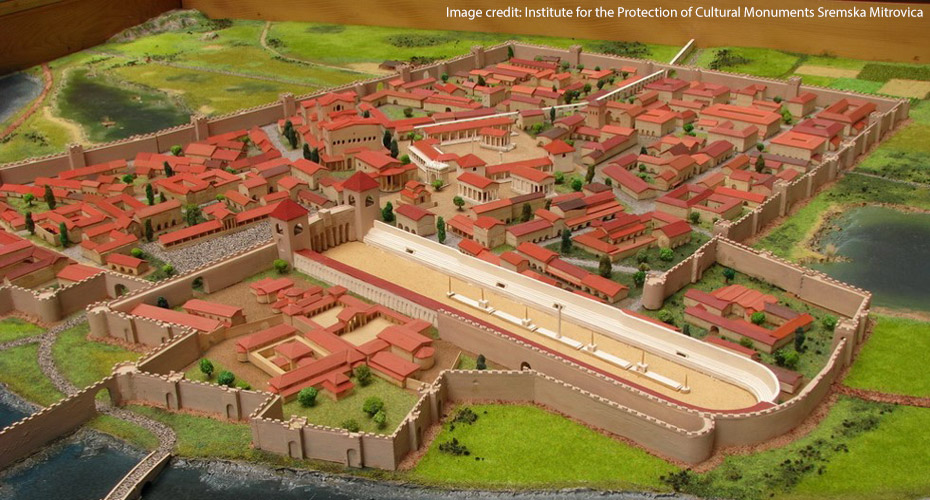
Sirmium, Roman city and one of four capitals in the late Antiquity

Sirmium, model of the Roman city
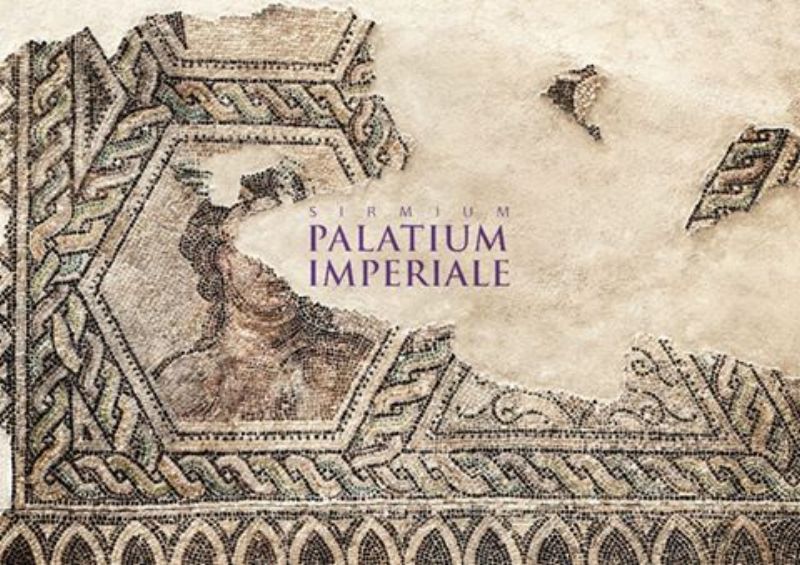
Mosaic of Roman god Mercury, found in the imperial pallace of Sirmium
Mosaic of Roman god of trade - Mercury, found in the imperial pallace of Sirmium

map-icon Sirmium was an important Roman city located in today's Sremska Mitrovica, Serbia. Founded in the 1st century AD, it soon became one of the four capitals of the Roman Empire during the Tetrarchy. As a major administrative and military center of Roman province Pannonia, Sirmium played a crucial role in controlling the Danube frontier and trade routes across the Balkans.

The city is known as the birthplace (or seat of power) of several Roman emperors, including Probus, Maximian, Constantius II, Gratian, and others who spent significant time in the imperial palace. In the Late Antiquity, Sirmium developed a strong Christian tradition, with an early bishopric and the growing veneration of Saint Demetrius, after whom the city was later named.

Archaeological excavations have revealed impressive remains of the imperial palace, granaries, baths, villas, and a large hippodrome. One of the most remarkable discoveries is over 350m² of preserved floor mosaics, highlighting the city's wealth and refined artistic culture.

Sirmium, Roman palace

Viminacium (Antiquity - Roman city & military camp - 1st-6th century CE)

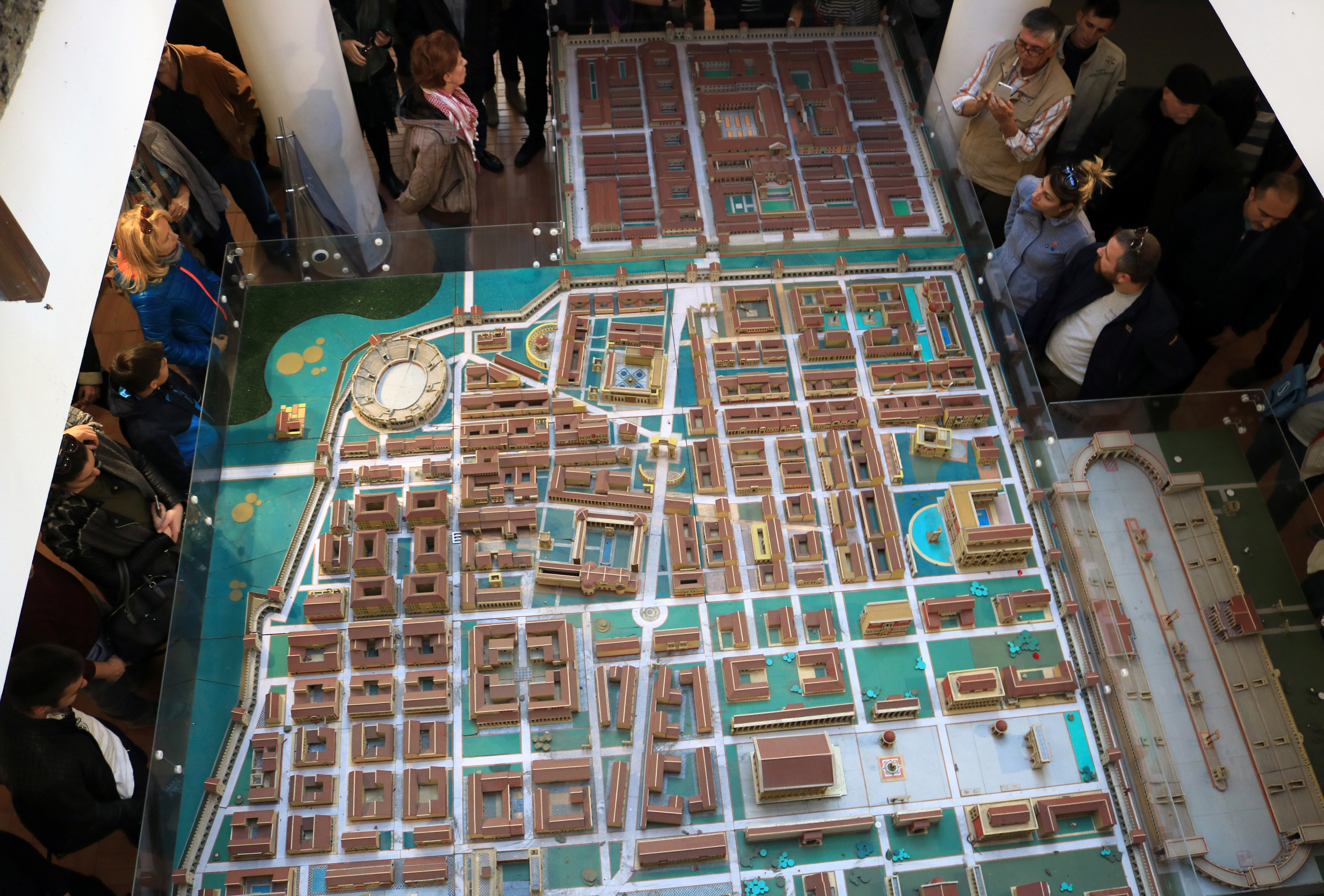
Exhibition of Viminacium, model of legion camp
Viminacium — capital of the Roman province Moesia Superior.
Model of town on exhibition Journey to the past Itinerarium Romanum Serbiae Viminacium.
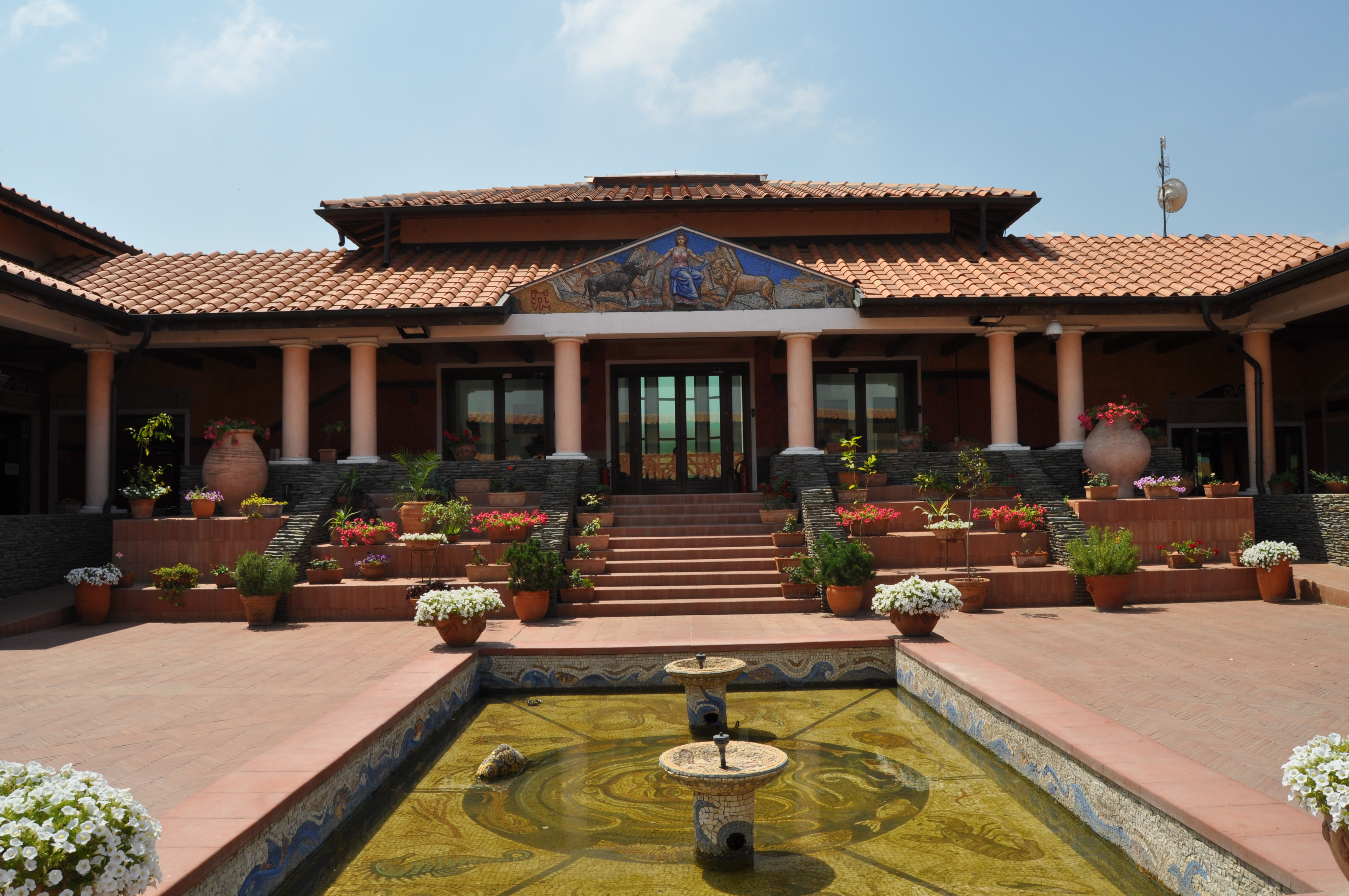
Reconstruction of Roman villa
Modern reconstruction of Roman villa, place for researchers and visitors

map-icon Viminacium was a major Roman legionary fortress and city located near modern Požarevac, Serbia, on the territory of the ancient Roman province of Moesia. Established in the 1st century AD, it remained an important military, administrative, and commercial center until the 6th century.

Excavations have revealed a well-planned city with streets, public buildings, baths, an amphitheater, and a necropolis. Rich tombs, mosaics, and frescoes provide detailed insight into everyday life, social organization, and artistic traditions of the Roman period.

Viminacium also served as a strategic military camp for Roman legions, controlling traffic along the Danube frontier. Beneath the Roman layers, archaeologists have uncovered prehistoric deposits, including remains of mammoths, showing that the site was occupied long before the Roman period. Thousands of artefacts, including weapons, jewelry, and ceramics, highlight the city's cultural and economic significance in the Roman Balkans. More information is available on the official website

Viminacium

Studenica, medieval monastery with hospital

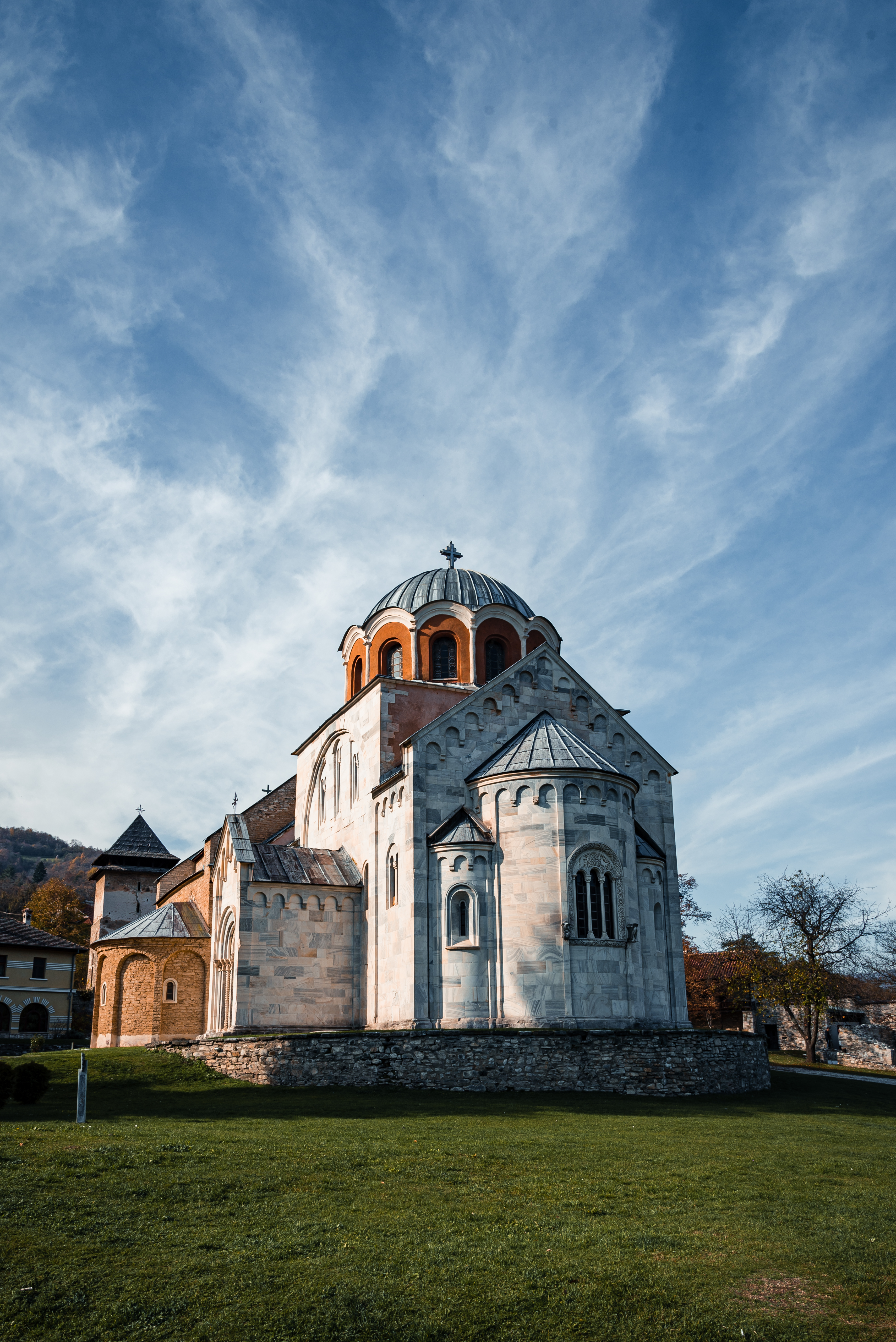
Studenica monastery, Virgin Mary church
Studenica monastery, main church dedicated to Virgin Mary
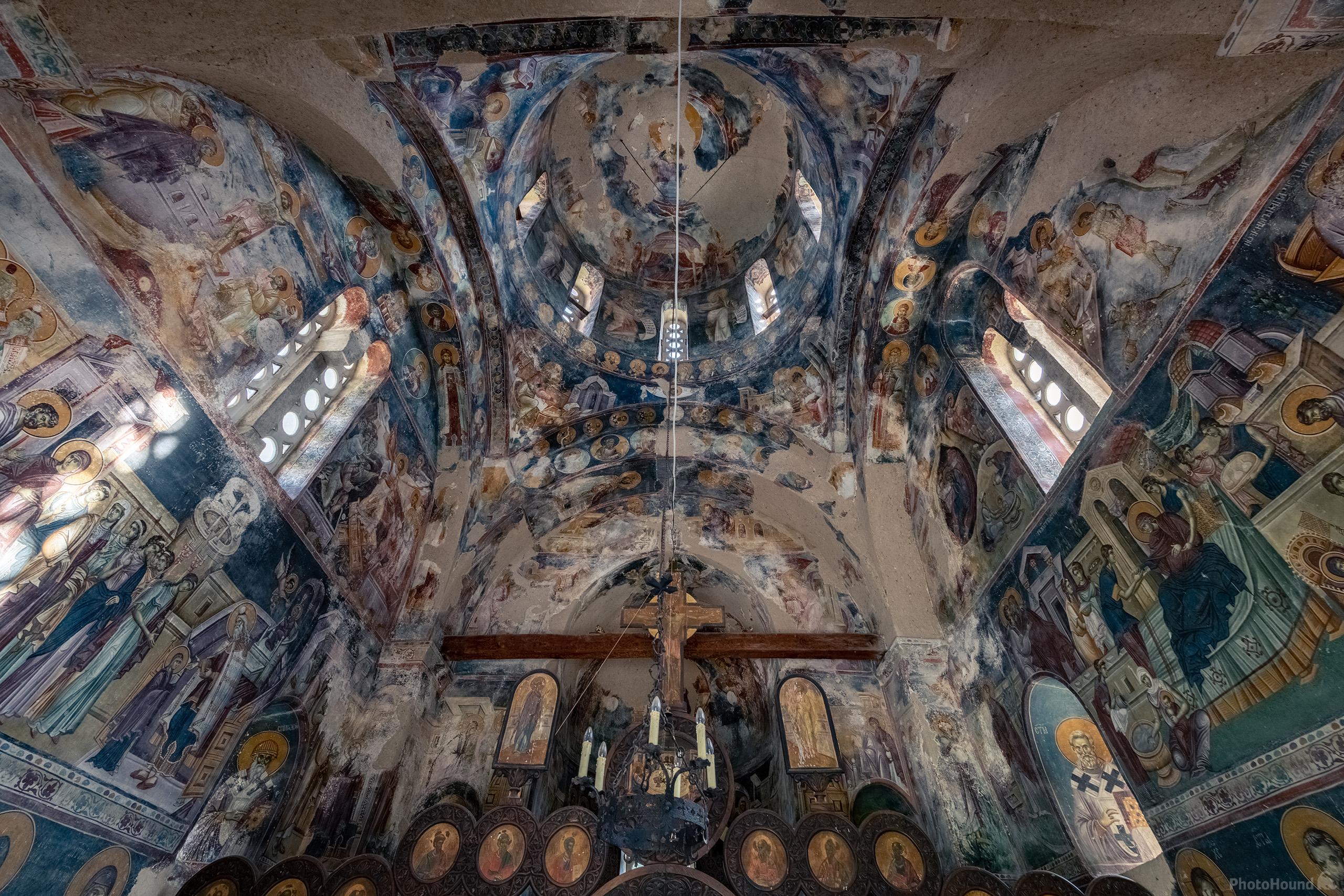
Frescoes from naos and dome of Virgin Mary church

map-icon Studenica Monastery founded around 1190. by Stefan Nemanja, is one of the key monuments of the Raška architectural school. The main church, the Church of the Virgin, was built of white marble at the end of the 12th century, and the most important frescoes were painted around 1208-1210. The monastery complex today includes three churches: the Church of the Virgin, the Church of St. Nicholas, and the King's Church (built in 1314 by King Milutin).

The sculptural decoration : portals, capitals, and ornamental reliefs, is attributed to master builders from the Kotor region and reflects strong connections with Romanesque art of Italy and the Adriatic coast. This blend of Western Romanesque forms and Byzantine tradition is characteristic of the Raška style and places Studenica within broader European artistic trends of the late 12th century.
Inside, the 13th-century frescoes, including the celebrated Crucifixion, rank among the finest achievements of Byzantine art.
Due to constant use and historical damages during the Ottoman period (when it was briefly used as a stable and a storage place), the frescoes within Studenica Monastery have undergone numerous restoration efforts throughout history, with major restauration and conservation campaigns continuing into the 21st century .

Archaeological excavations at Studenica were carried out in several phases, most intensively between 1951. and 1958., with later supplementary investigations in the 1960s-1970s and smaller targeted studies accompanying 20th- and 21st-century restoration work.

Throughout its long history, Studenica remained a center of literacy, art, and healing. Medieval monks compiled important historical records, illuminated manuscripts, and medical texts. Studenica is known to have had a monastic infirmary, following the Byzantine tradition of providing basic medical care to monks, pilgrims, and travelers. Treatment relied on diet, herbal remedies, and simple medical procedures, reflecting the broader medical knowledge preserved in medieval Orthodox monastic communities, such as the well-known Hilandar Medical Codex.

Recognized for its outstanding universal value, Studenica was inscribed on the UNESCO World Heritage List in 1986 . Today, it stands as a serene complex nestled in the Ibar valley, a place where art, history, and devotion have intertwined for more than eight centuries.

Studenica, drone view

Resava (Manasija), medieval monastery and fortress, with library and scriptorium

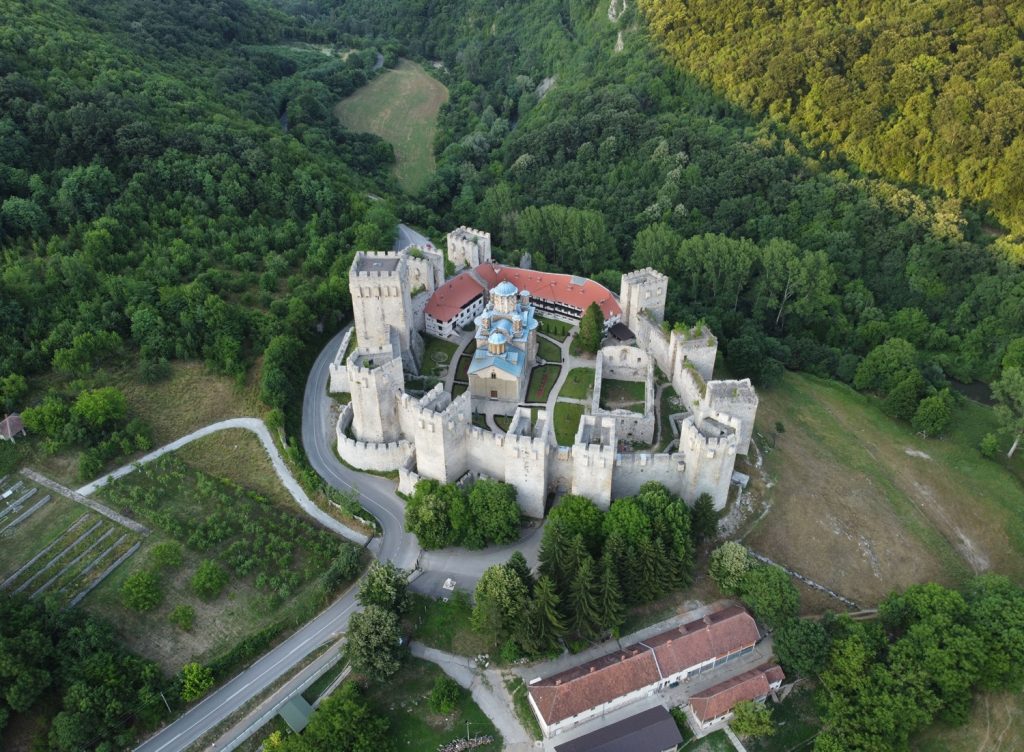
Resava monastery, aerial view
Resava monastery
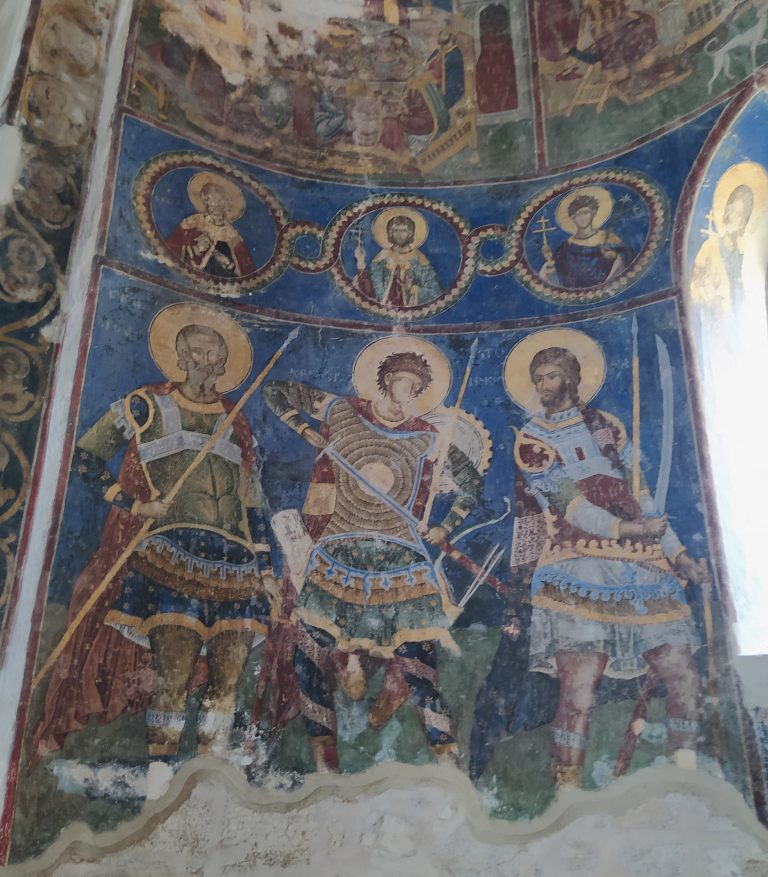
Frescoes - Holly Warriors

map-icon Resava Monastery is a Serbian Orthodox monastery near Despotovac, Serbia, founded by Despot Stefan Lazarević between 1406. and 1418. The monastery is dedicated to the Holy Trinity, while the main church is dedicated to St. George.

The complex includes fortification walls with eleven towers, including a central donžon (keep) tower, a gate, and other defensive elements, highlighting its strategic importance. Its architectural style belongs to the Morava School, known for decorative stonework and balanced proportions.

The monastery became an important center of literacy and manuscript production. The Resava School, founded by Konstantin the Philosopher, served as a scriptorium and literary workshop. Its main goal was to correct errors in earlier translations and copies, establishing a consistent and highly valued orthographic standard. The school was extremely productive: its influence persisted throughout the 15th and 16th centuries, with its reputation lasting until the end of the 17th century. The monastery possessed a library of over 20,000 books (volumes). The impact of Resava's orthographic rules and manuscript work extended to other monasteries across the Balkans (Hilandar, Peć Patriarchate, Dečani, Ljubostinja) and even reached Russia, Bulgaria, and Romania.

Under Despot Stefan Lazarević, Resava played a central role in the cultural, educational, and defensive life of medieval Serbia, influencing other monasteries, manuscript production, and Morava-style architecture in the region.

Archaeological research and restoration at Resava Monastery, mainly between the 1950s and 1970s, focused on the church structure, fortification walls, frescoes, and monastic buildings, with further conservation and targeted studies continuing into the 21st century. During these works, foundations, architectural details, and traces of earlier construction phases were documented, providing insight into the original layout and the development of the complex over time.

Resava (Manasia)

Sites map

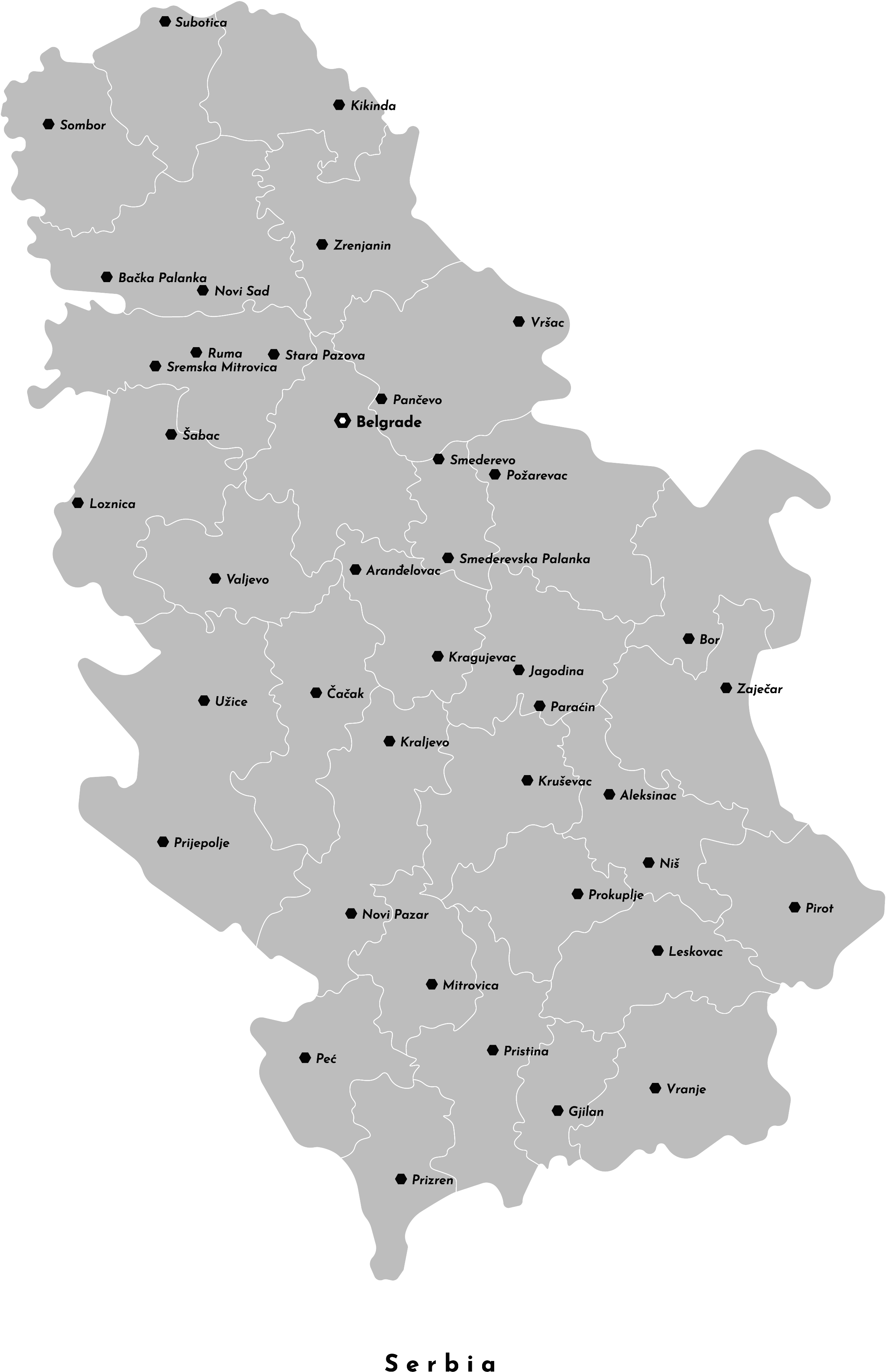
Serbia map

Chronology Table

Site Prehistory Antiquity Medieval
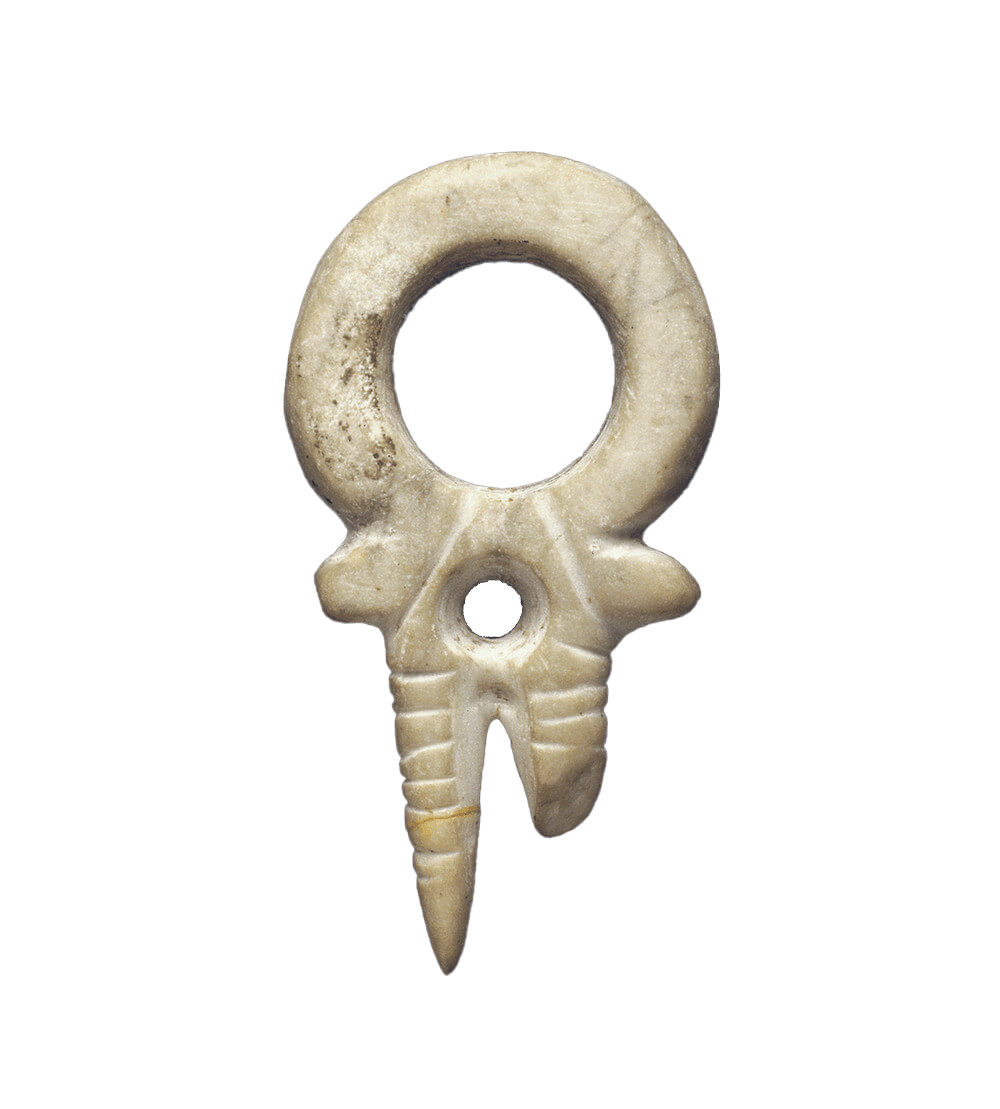
Lepenski Vir Bone carved amulet from Lepenski Vir

Amulet carved from animal bone, Lepenski Vir

Period: 9500-6000. BCE
Findings: Trapezoidal houses, fish-human stone sculptures
Significance: One of the earliest permanent settlements in Europe
Vinča Vinča

Stylizied head from clay, Vinča culture

Period: 5400-4500. BCE
Findings: Pottery, figurines, proto-symbols, copper smelting
Significance: Large Neolithic proto-urban settlement; possible proto-writing system
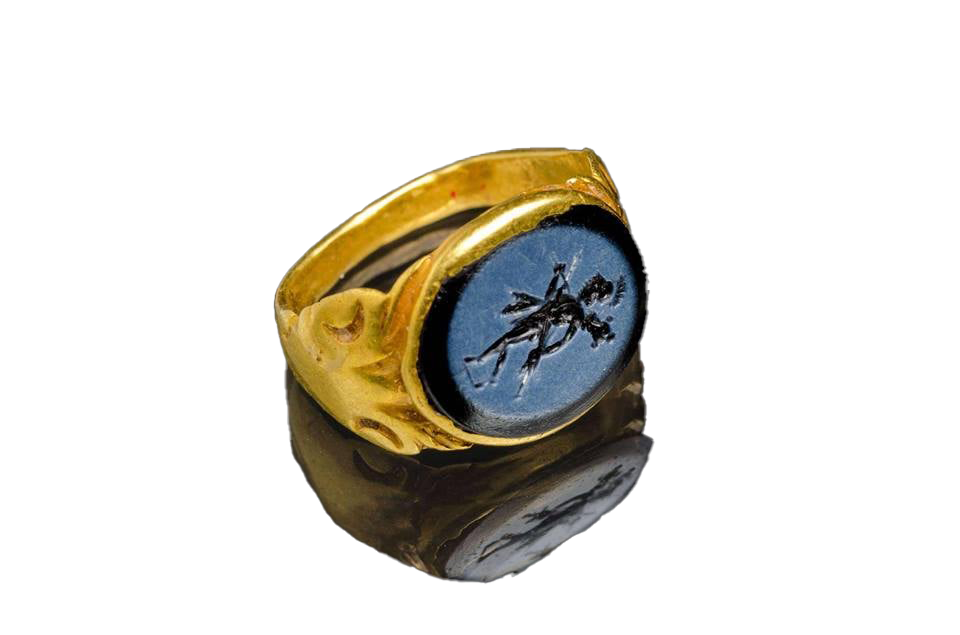
Singidunum later Belgrade Belgrade, Roman ring

Roman ring from Singidunum, gold with blue gemstone
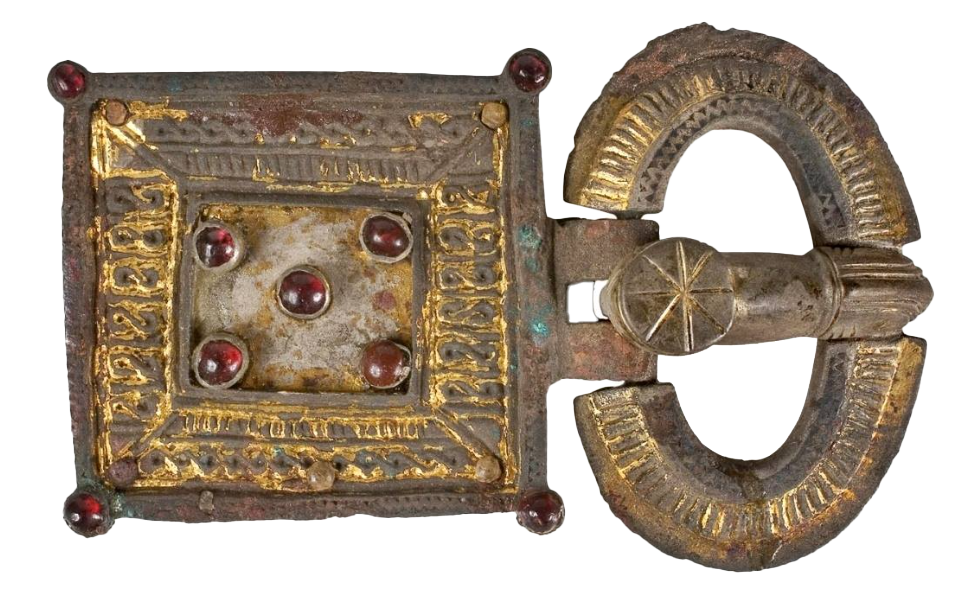
Belgrade, belt-buckle

Belt-buckle from Singidunum, gold plated bronze with almandines, 5th century
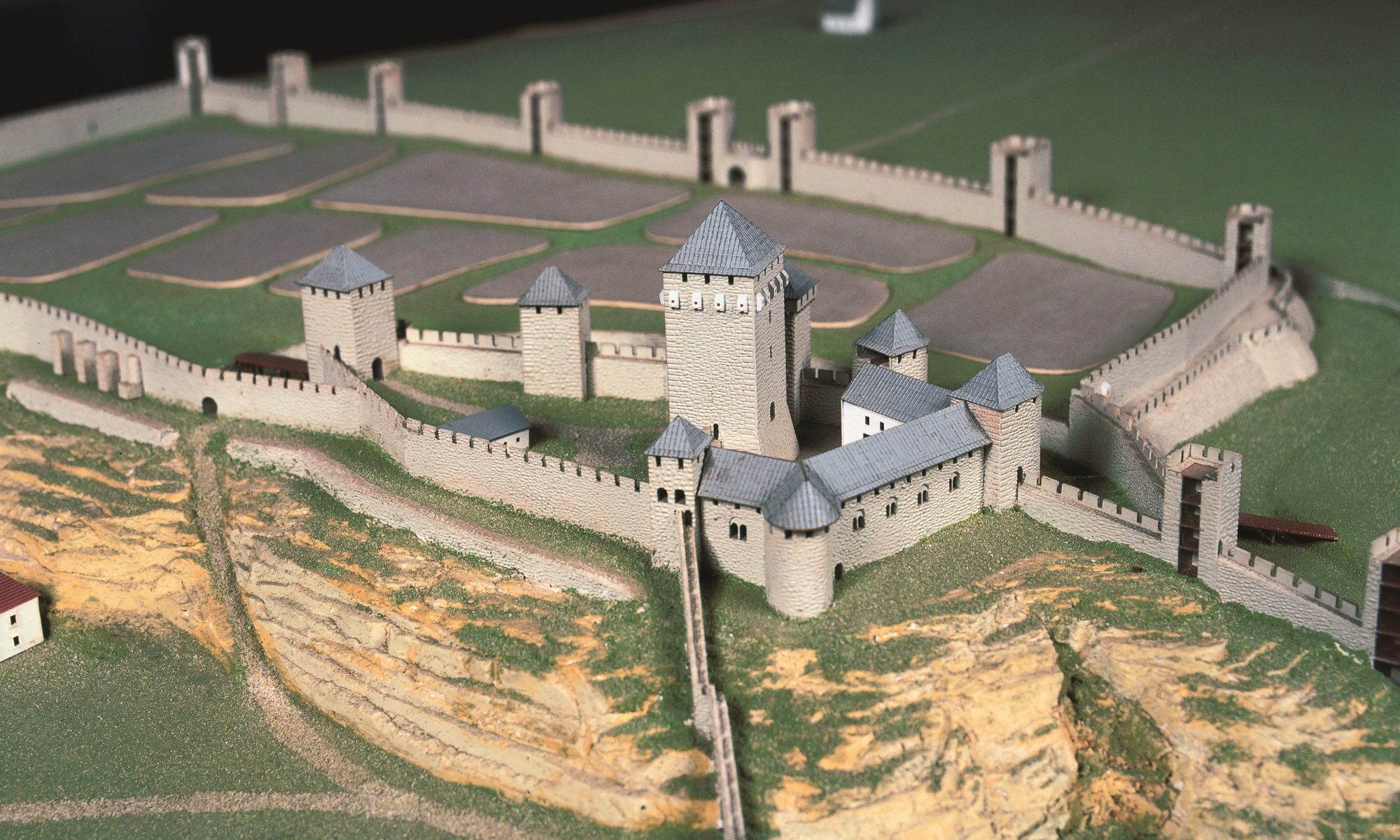
Belgrade castle, 15th century

Belgrade castle from the time of Despot Stefan, 15th century

Period: From Paleolithic to Iron Age
Findings: Early habitation layers (Starčevo, Vinča, Bronze and Iron Age)
Special note: In 1938., mammoth remains were discovered during construction of the "Albanija" Palace, becoming part of urban legend. Later bridge works over the Sava and Danube revealed large quantities of mammoth bones and tusks, showing that beneath modern Belgrade lies a prehistoric “cemetery” of Ice Age animals.
Significance: Continuous settlement before Roman fortifications.
Preroman (800-75. BCE): Thracians, Dacians, Celtic Scordisci founded Singidunum
Findings: Settlement layers, Scordisci oppidum
Significance: Early habitation before Roman fortifications

Roman Period (1st-7th century): Roman fortifications, legionary camp; Byzantine and Slavic layers
Findings: Castrum, military architecture, urban remains
Significance: Important military stronghold on the Danube frontier

Period: 12th-15th century
Findings: Medieval walls, towers
Significance: Key defensive stronghold at Sava-Danube confluence
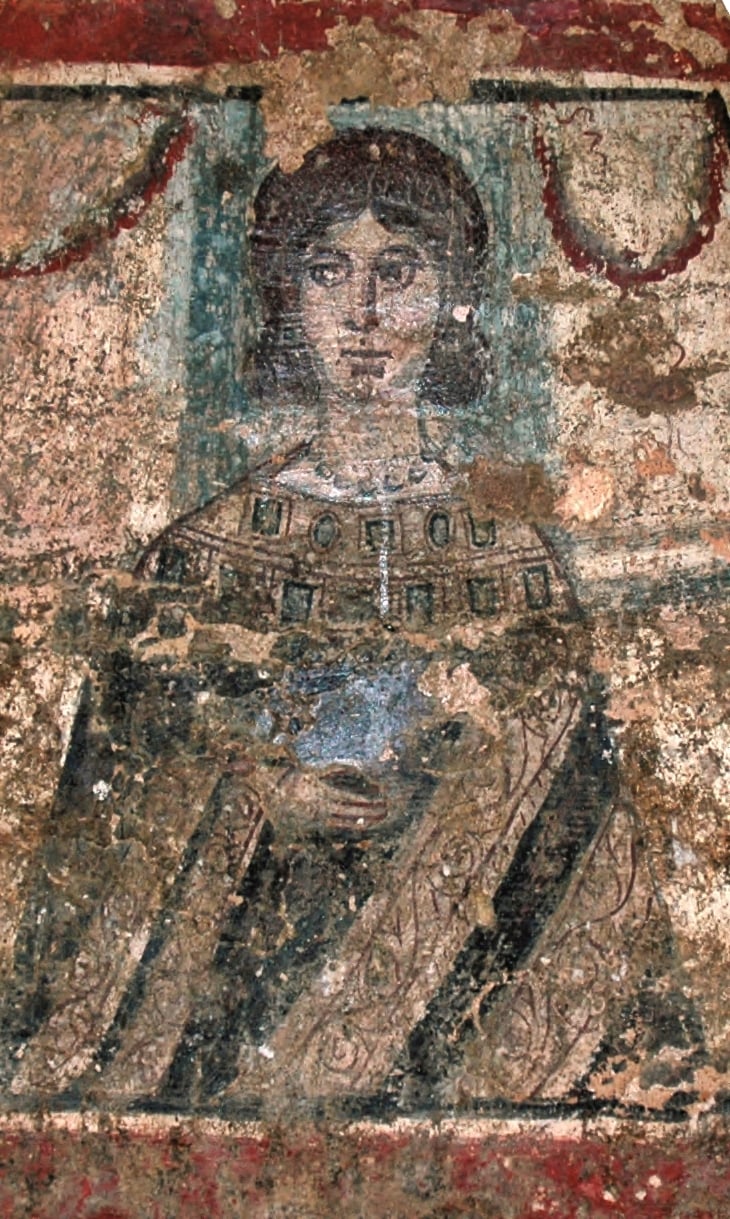
Viminacium Viminacium frescoes

"Mona Lisa" from Viminacium, 4th century frescoe

Period: Neolithic-Bronze Age
Findings: Mammoth remains, prehistoric settlement layers
Significance: Evidence of long settlement continuity before Roman period
Period: 1st-7th century
Findings: Amphitheater, baths, necropolis; cemeteries and burials of Goths, Huns, Slavs
Significance: Major Roman military camp and city; destroyed during invasions but life continued through Migration burials
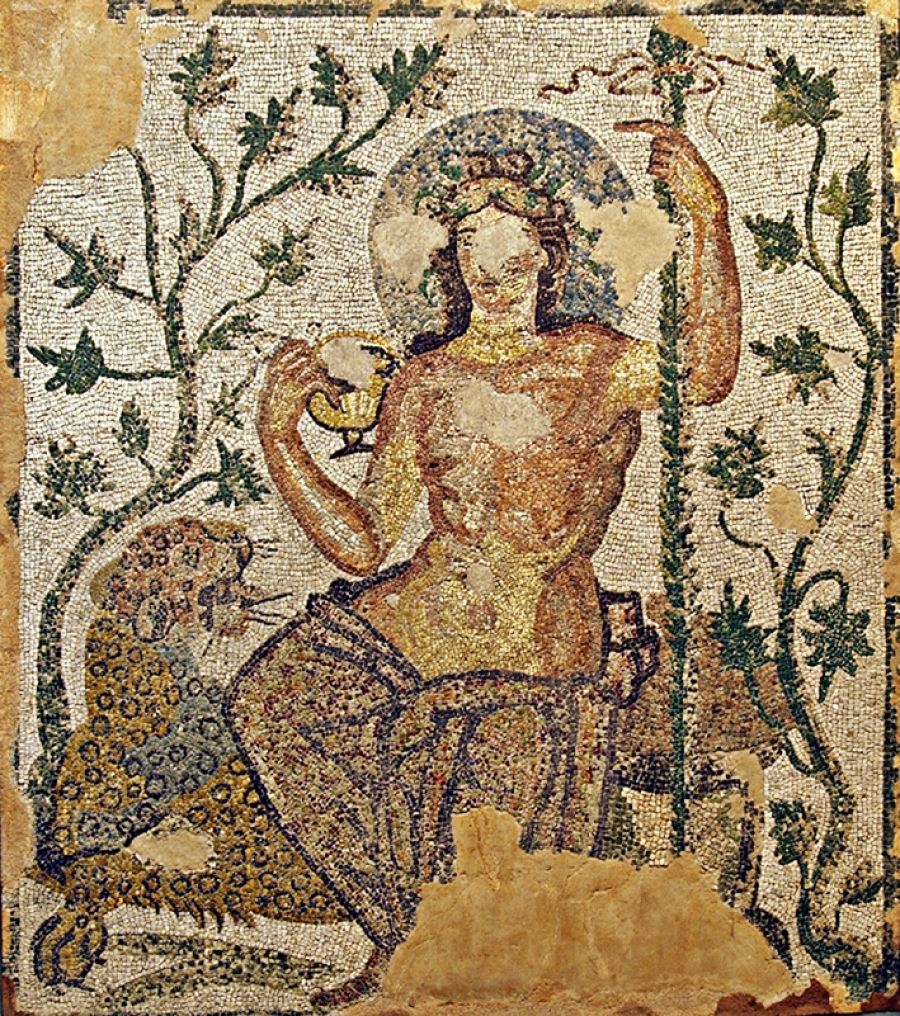
Felix Romuliana (Gamzigrad) Felix Romuliana

Roman mosaic depicting Dionysus, Felix Romuliana (Gamzigrad), 3rd-4th century

Period: 3rd-4th century
Findings: Palaces, temples, mosaics
Significance: Imperial complex of Emperor Galerius, UNESCO site
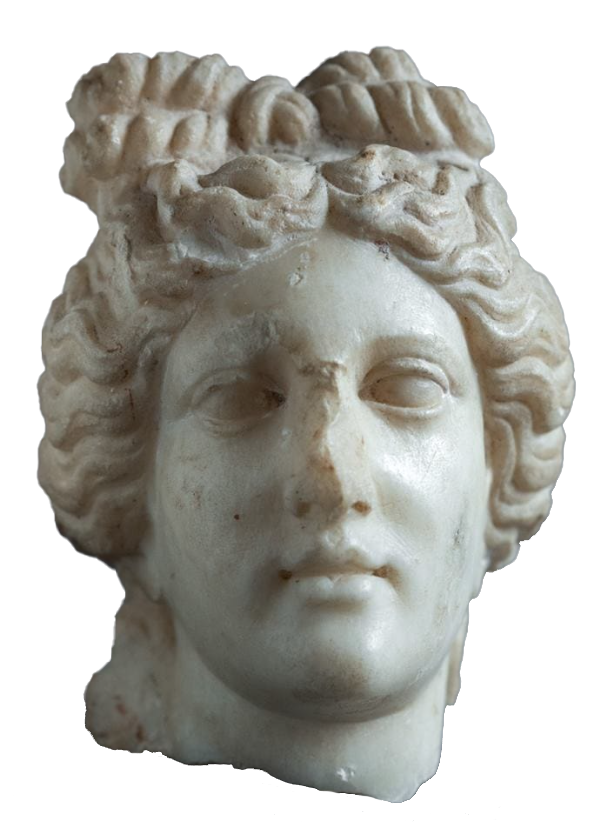
Sirmium Roman marble sculpture, head of Venus, Sirmium, 1st century

Roman marble sculpture, head of Venus, Sirmium, 1st century AD

Period: 1st-6th century
Findings: Palaces, coins, basilicas; Christian basilicas, ruins after invasions
Significance: One of the capitals of the Roman Empire; repeatedly destroyed during Gothic and Hun invasions
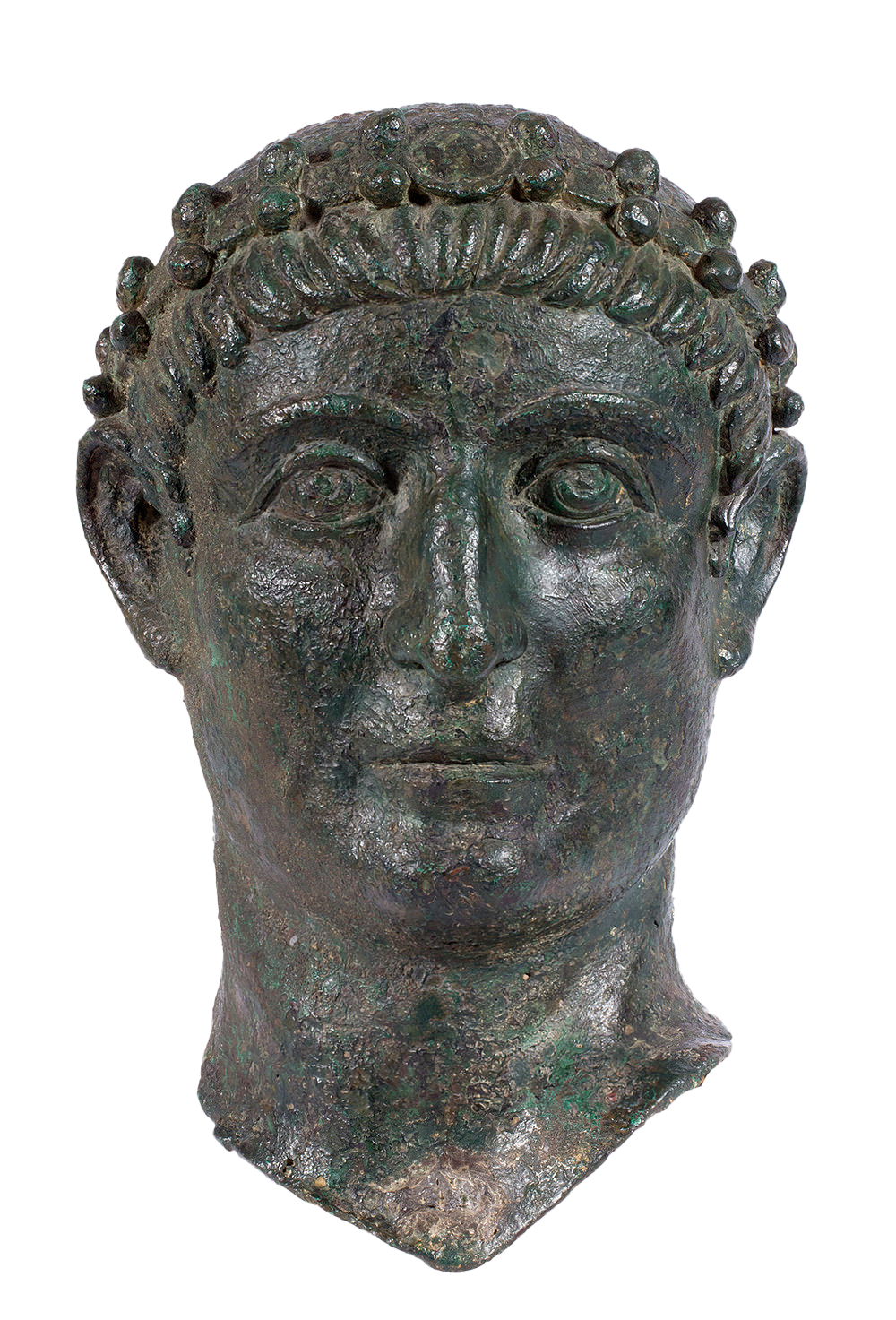
Naissus (Niš) and Mediana Roman bronze sculpture, head of Constantine the Great, Naissus, 4th century

Roman bronze sculpture - head of Constantine the Great, Naissus, 4th century

Period: 3rd-6th century
Findings: Fortifications, baths, basilicas, mosaics, sculptures; ruins after invasions, traces of Gothic and Hun destruction
Significance: Birthplace of Constantine the Great; key city in Migration era, devastated but remained strategic
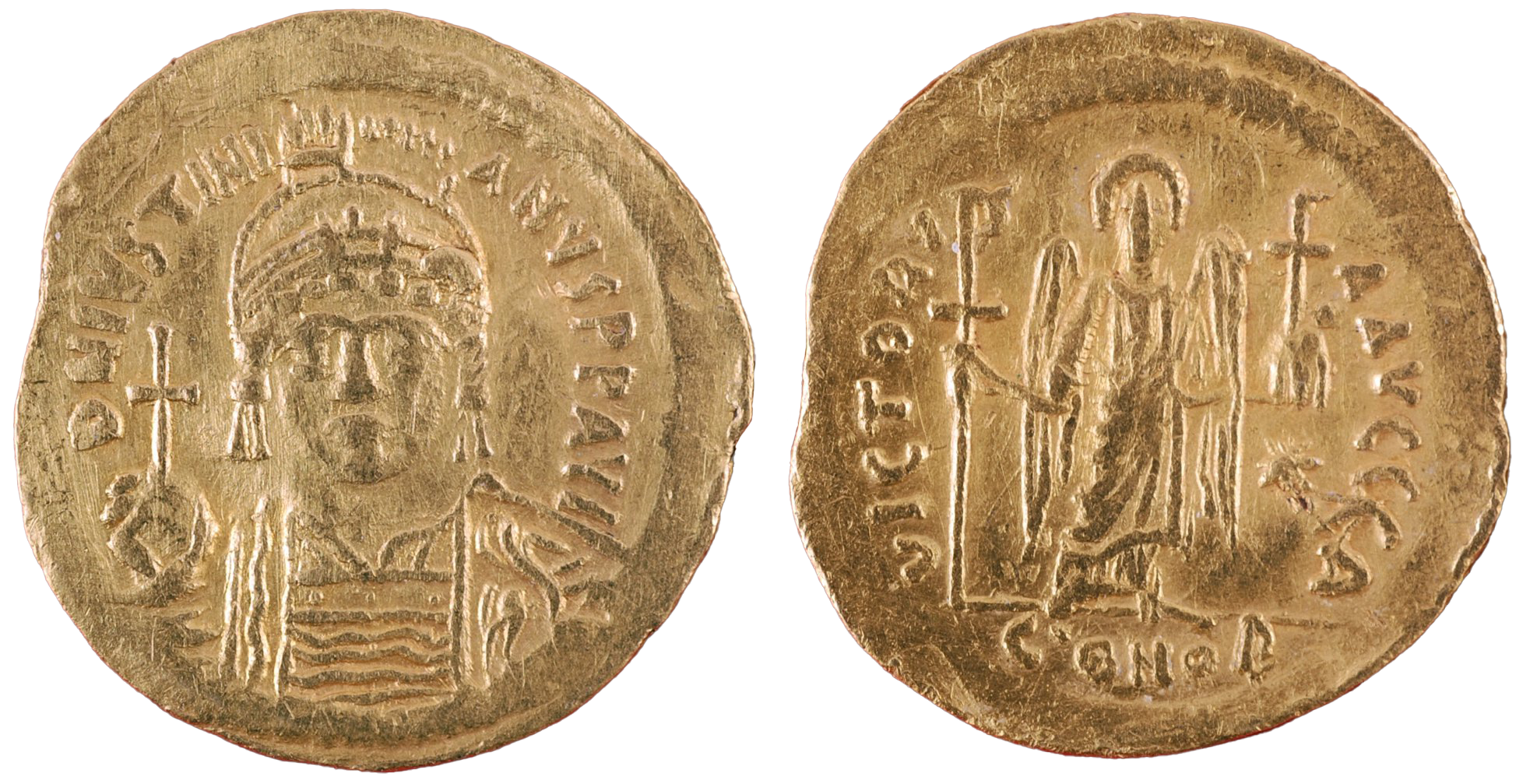
Justiniana Prima (Caričin Grad) Golden coin of Justinian I, Justiniana Prima

Golden coin of Justinian I, Justiniana Prima, 6th century

Period: 6th century
Findings: City walls, churches, administrative buildings
Significance: Founded by Emperor Justinian I
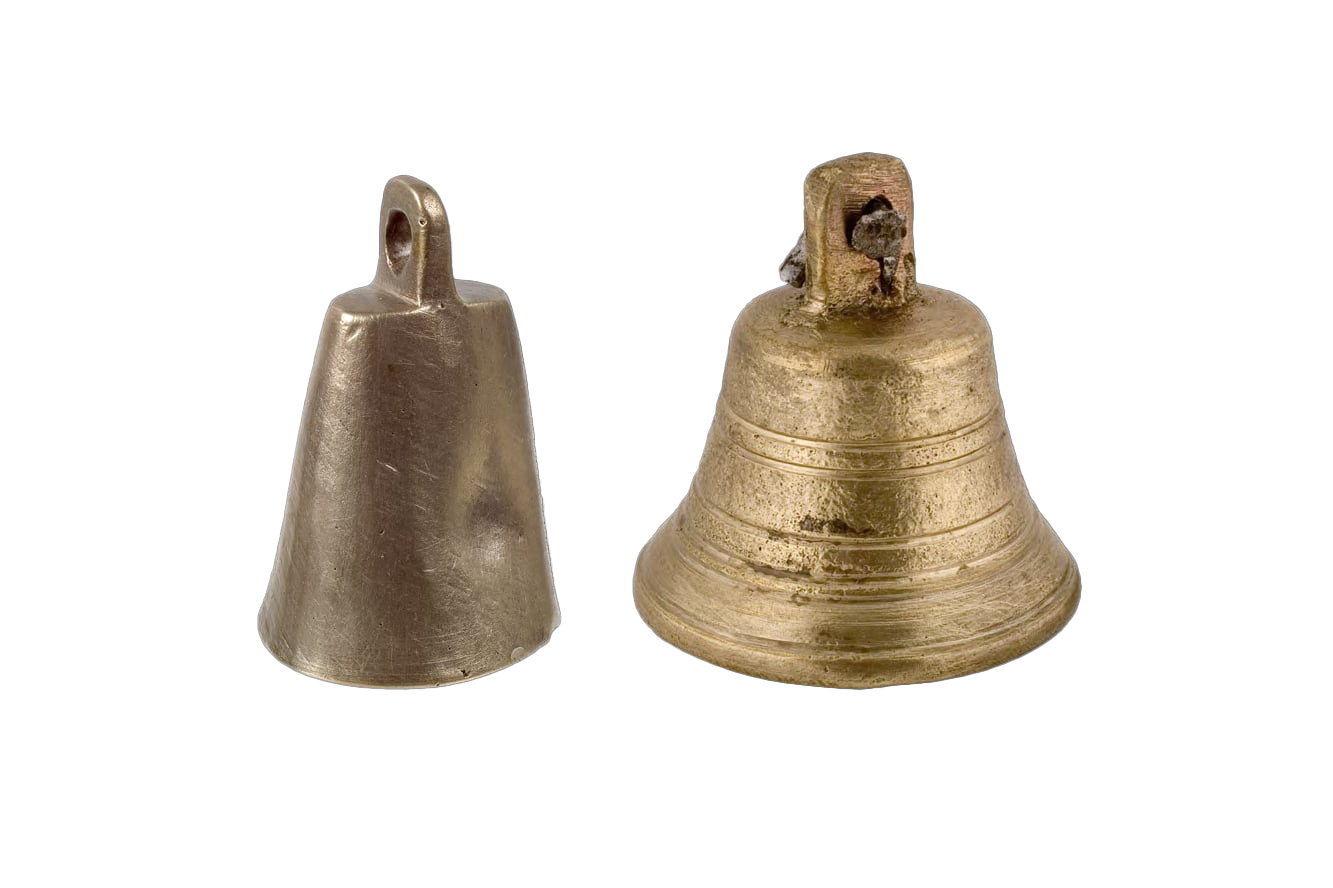
Gradina na Jelici Bronze bells, Gradina na Jelici, 6th-7th century

Bronze bells, Gradina na Jelici, 6th-7th century

Period: 6th-7th century
Findings: Jewelry, ceramics, liturgical objects, five churches, frescoes, graves inside churches, fortifications
Significance: Byzantine fortified highland city during late Antiquity and the Migration Period
Period: 7th-9th century CE
Findings: (to be added)
Significance: Early Medieval continuation: 8th-9th century - small fortified Slavic settlement.
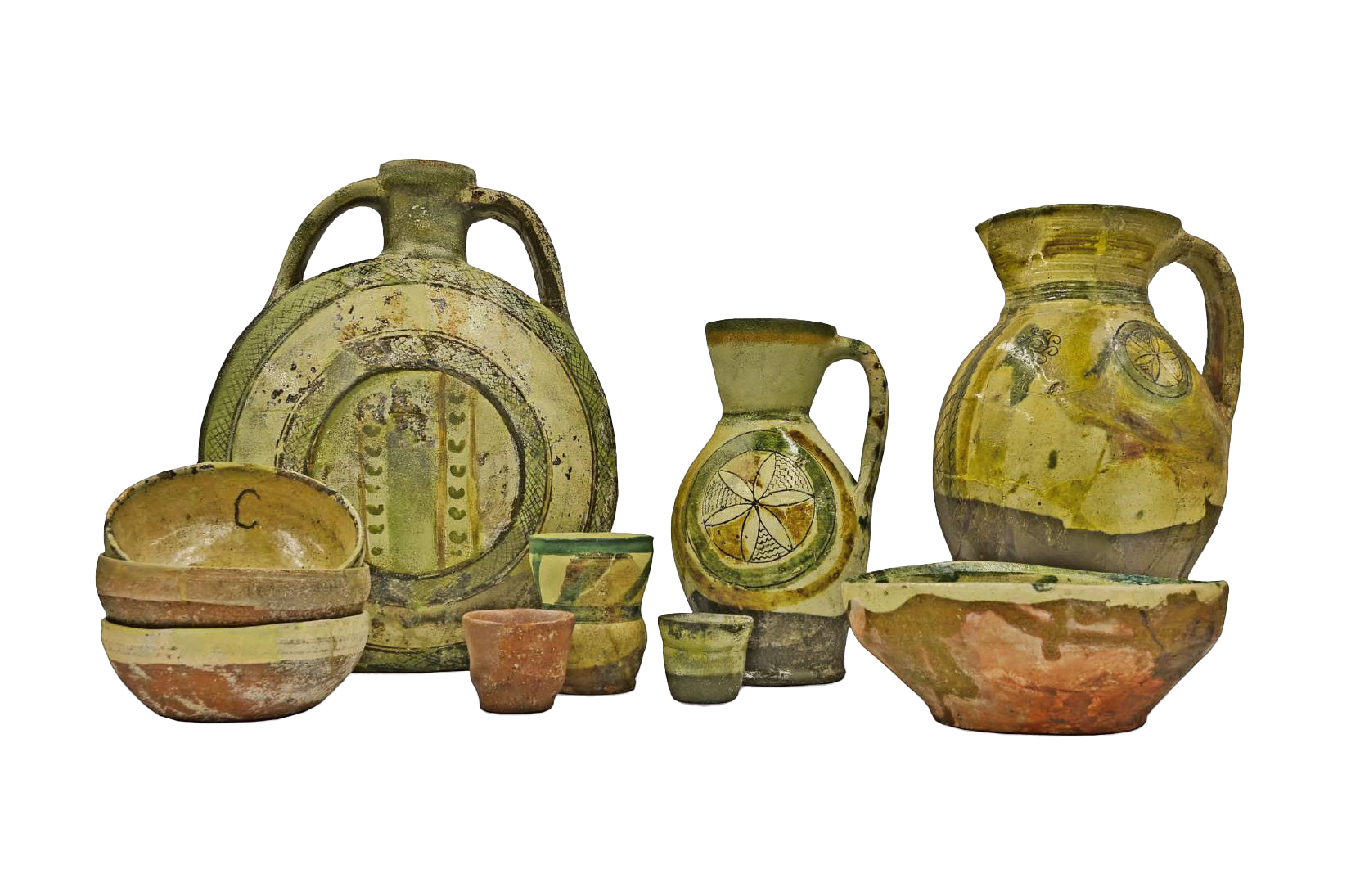
Studenica Monastery Medieval Serbian tableware, enameled and painted terracota, Studenica Monastery, 14th-15th century

Medieval Serbian tableware, enameled and painted terracota, Studenica monastery, 14th-15th century

Period: 12th century
Findings: Churches, frescoes, relics
Significance: Most important Serbian monastery, UNESCO site
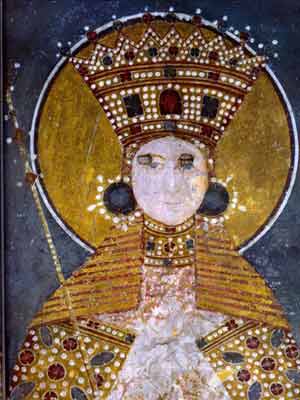
Gračanica Monastery Frescoe depicting queen Simoninda, Gračanica Monastery, 14th century

Frescoe depicting queen Simonida, Gračanica monastery, 14th century

Period: 14th century
Findings: Church, frescoes
Significance: Masterpiece of Serbian medieval architecture, UNESCO site
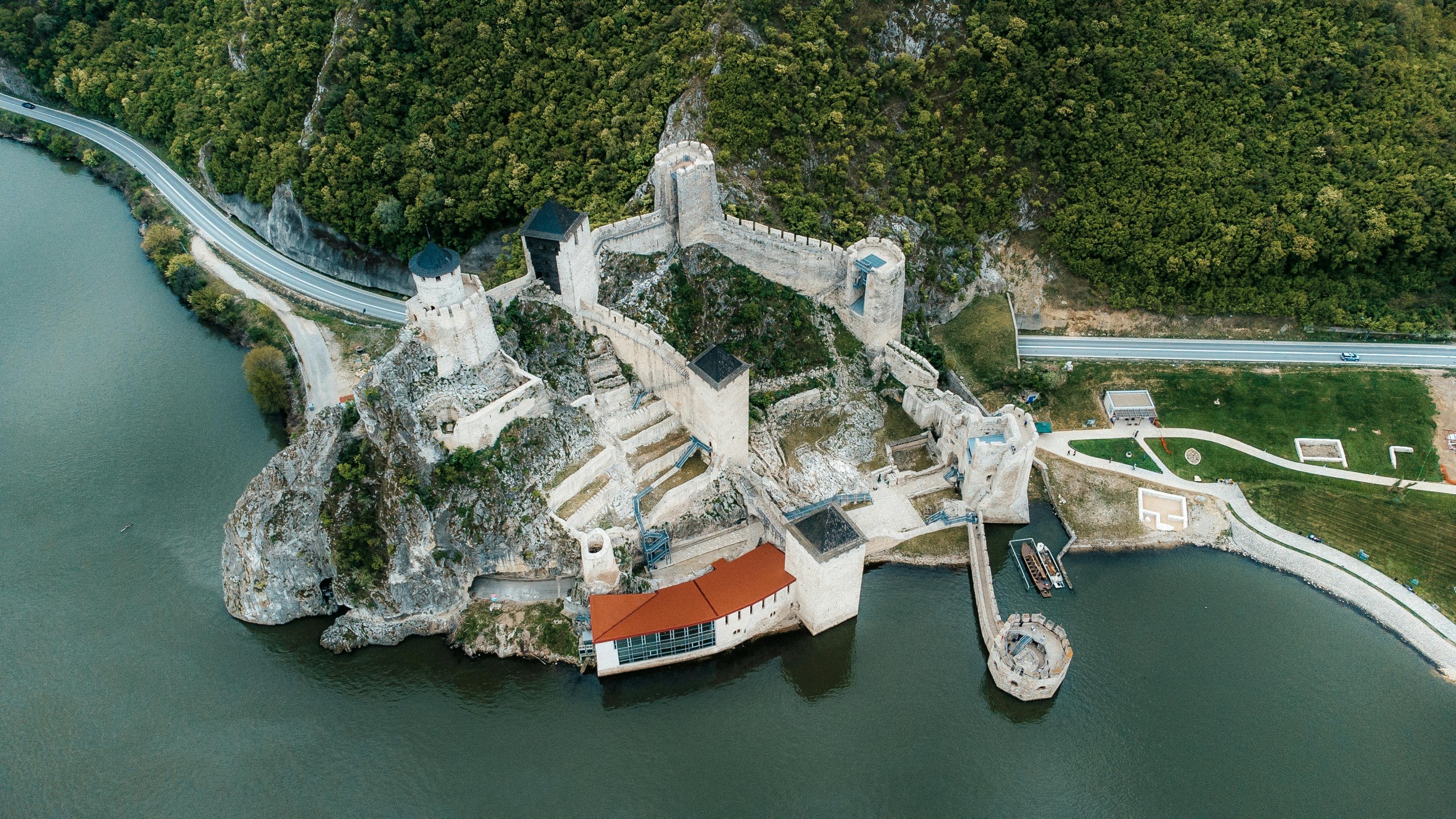
Golubac Fortress Golubac Fortress, aerial view

Golubac fortress, 14th century

Period: 14th century
Findings: Towers, walls, gates
Significance: Strategic fortress on the Danube
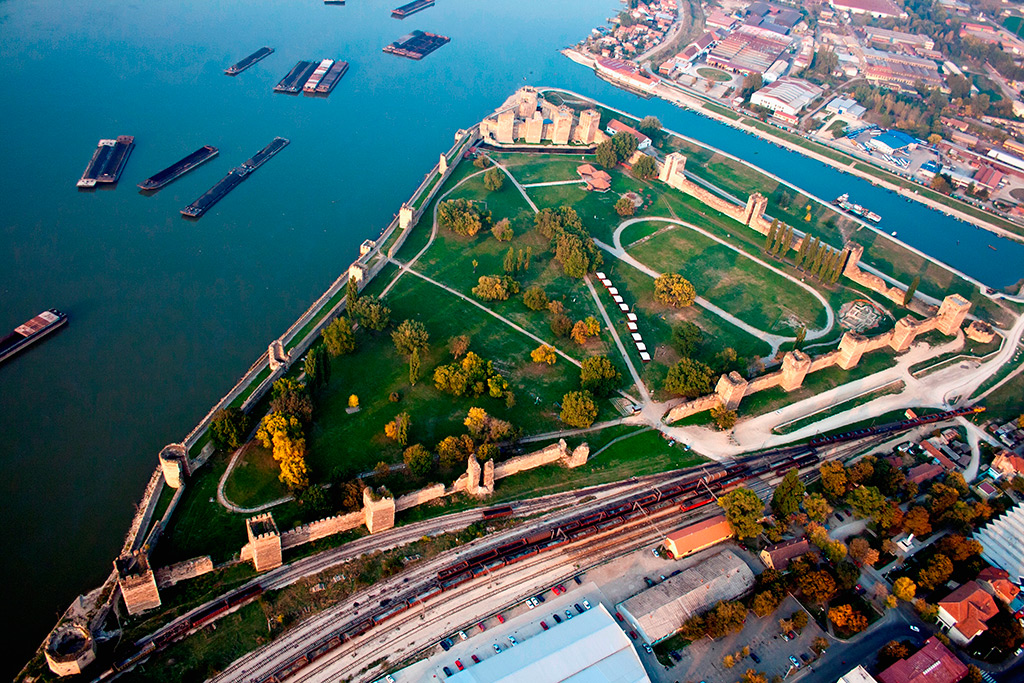
Smederevo Fortress Smederevo Fortress with palace, 15th century

Smederevo fortress with palace, 14th century

Period: 15th century
Findings: Walls, towers, citadel, ceramics, jewlry, weapons, everyday objects
Significance: Largest medieval fortress in the Balkans
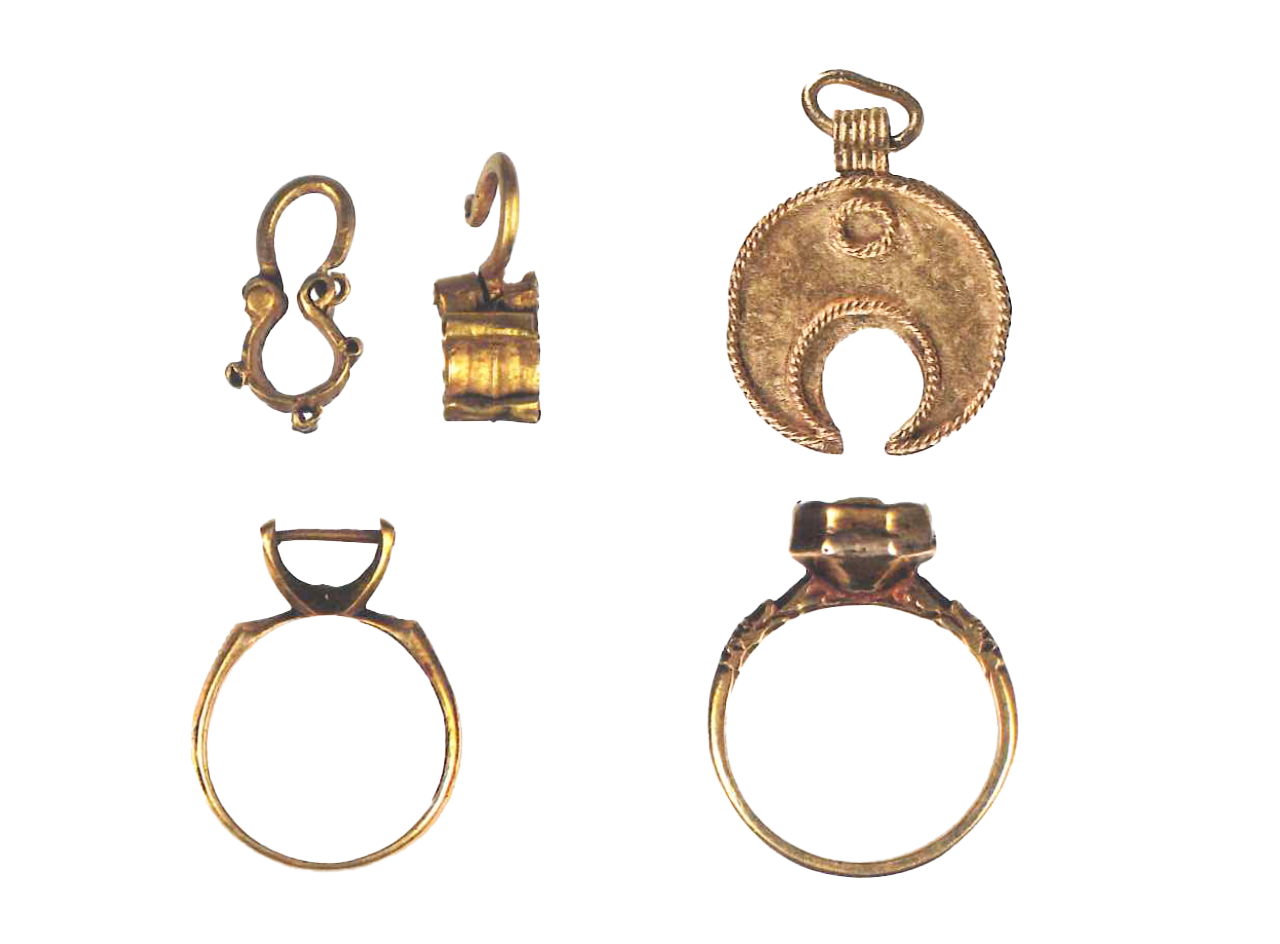
Novo Brdo Serbian medieval jewlry discovered at Novo Brdo Fortress, 14th-15th century

Serbian medieval jewlry, discovered at Novo Brdo fortress, 14th-15th century

Period: 14th-15th century (conquered in 1455.)
Findings: Fortress, remains of churches, mining equipment, jewelry, coins
Significance: Major medieval mining (silver & gold) and trade centre; economic hub of the Serbian Despotate; site of the Mining Code (Zakonik o rudnicima)
Resava (Manasija Monastery) Resava (Manasija) Monastery, 15th century

Resava monastery, 15th century

Period: 15th century
Findings: Church, frescoes, fortified walls
Significance: Founded by Despot Stefan Lazarević; Morava architectural school; cultural and literary center
Such is the nature of archaeology - an ongoing mystery tale whose plot slowly unfolds. Eric H. Cline